


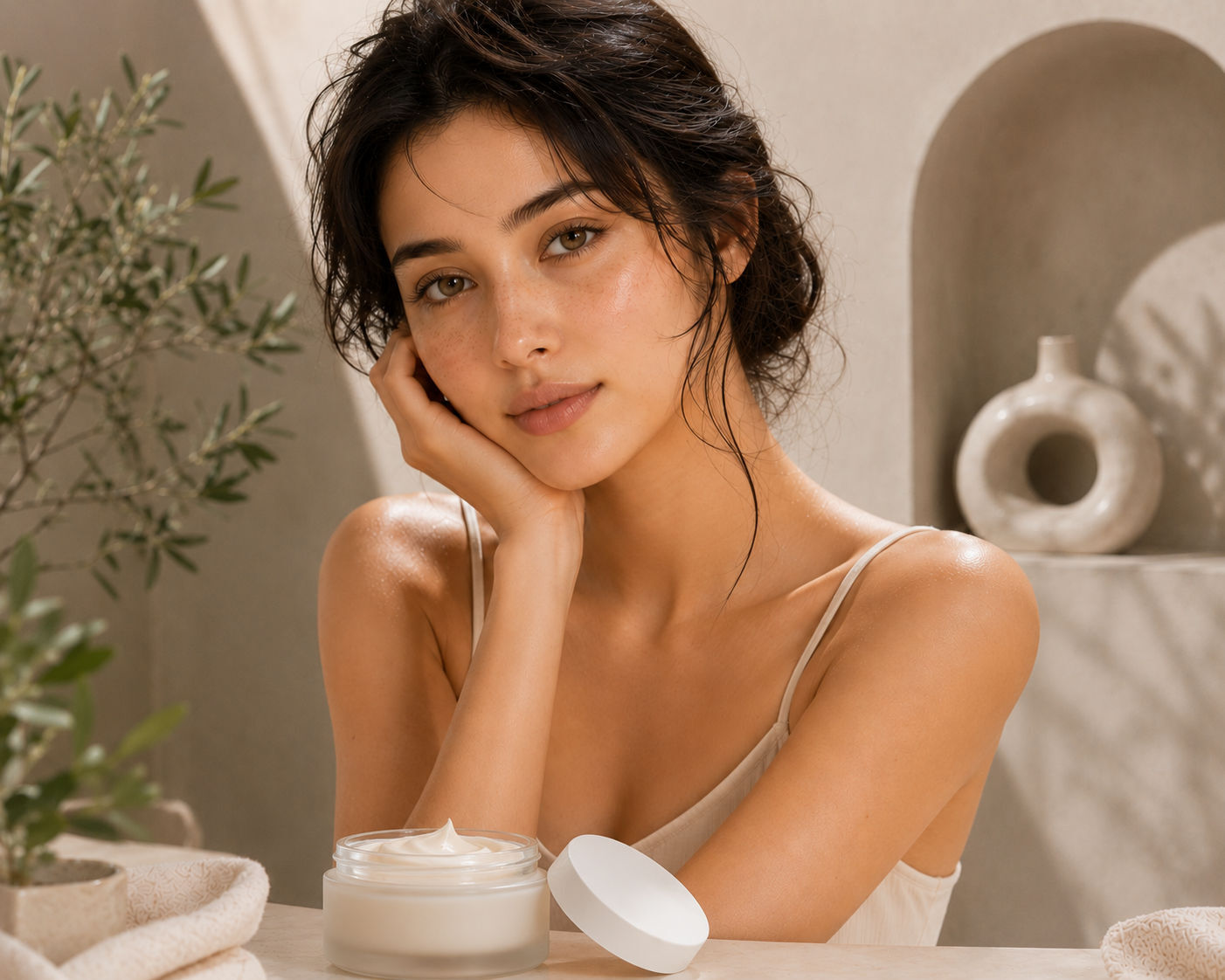
Nourishing cream is a cream designed to supply moisturizers, lipids, and emollients to dry and dull skin, making it soft and supple, and providing a lustrous and healthy-looking appearance. In cosmetics, "nourishing" does not mean supplying nutrients deep into the skin or treating cells, but is a market term used to express rich moisturizing, suppleness, and radiance effects in a way that is easy for consumers to understand.
If No. 039 Rich Moisture Cream focuses on long-lasting, No. 040 Barrier Cream on inhibiting moisture loss, and No. 046 Firming Cream on improving wrinkles and elasticity, the identity of No. 045 lies in its rich, lipid-rich texture, skin softness, and radiance . The balance of oils, butters, squalane, and moisturizers, as well as the actual feel on the skin, are more important than expensive plant extracts.
The core consumers are those with dry, rough-looking skin who experience tightness and fine dead skin cells after washing their face, causing their makeup to cake. Key customers include those affected by seasonal dryness, air conditioning/heating environments, middle-aged individuals with reduced oil production, or those for whom light moisturizing creams alone are insufficient for hydration.
Consumers expect a richness the moment of application and softness that lasts until the next day, but they avoid the sensation of a thick oil film remaining on the face, transferring to pillows and hair, or clogging pores. Therefore, nourishing creams should not simply increase the oil content, but should have a formulation that is rich yet spreads evenly, leaving only a supple sheen after absorption .
Nourishing creams are a category where the dry skin, mature skin, radiance, and luxury moisturizer markets overlap. In North America and Europe, nourishing, replenishing, glow, and ultra-rich are the main purchasing terms, while in Korea and Asia, ginseng, fermentation, herbal medicine, and plant oils are used as the narratives for luxury creams.
The main target customers are as follows.
- Dry/Extremely Dry Skin: Customers who desire richer oil and longer-lasting moisture than basic moisturizers
- Middle-aged Skin: Consumers concerned about loss of radiance and elasticity, and fine lines caused by dryness
- Demand for intensive night care: Customers using rich cream at the last step of their evening routine
- Dry Climate & Winter Market: Consumers experiencing increased skin tightness in low humidity and heating environments
Targeting a broad range of skin types, including oily and acne-prone skin, can blur the product's identity. It is better to establish the core facial product as an unscented daily nourishing cream for dry and middle-aged skin , and separate its role from balms for extremely dry skin or functional products for elasticity and whitening.
Nourishing creams are formulated with a combination of humectants that attract moisture, such as glycerin; emollients that soften the skin, such as squalane, esters, and plant oils; and occlusives that reduce moisture evaporation. Since plant oils differ in their fatty acid composition and oxidative stability, they should not be selected arbitrarily simply because they are natural.
| Formula Route | Key Components and User Experience | Buyer's judgment |
|---|---|---|
| Balanced Lipid Nourishing Cream | A combination of glycerin, squalane, neutral esters, jojoba or sunflower oil, and a small amount of butter. | Recommended Route with a good balance of richness and absorbency |
| Botanical Oil Rich Cream | A rich cream centered on plant oils, shea butter, and plant extracts | Advantageous for naturalistic stories, but requires management of oxidation, fragrance, and allergens. |
| Premium Active Nourishing Cream | Combination of ginseng, peptides, and antioxidant components with a lipid base | It can be positioned at a high price point, but overlaps with No. 046 Firming Cream. |
Fragrance-Free Balanced Lipid Nourishing Cream is suitable for NoChemiLife . It is formulated as a rich but not overly waxy cream by combining jojoba or sunflower oil, a small amount of shea butter, glycerin, and panthenol, centering on squalane and emollients with relatively good oxidative stability.
Depending on the type, plant oils have the potential to help strengthen the skin barrier and maintain moisture, but the results vary depending on the fatty acid composition, degree of purification, and the extent of rancidity. In particular, rather than simply adding large amounts of oil, it is important to manage oxidation and off-odors through appropriate emulsion structures, antioxidants, and container design. Topical plant oils review
The main risks associated with nourishing creams are the oxidation of plant oils, butters, and fragrances; the inherent odor of the ingredients; fragrance allergens; and complaints regarding stuffiness and clogged pores caused by heavy formulations. When using nut, seed, or herbal ingredients, it is necessary to verify the degree of purification, impurities, allergen data, and supply stability.
| Confirmation area | Buyer Required Data | Go/Hold criteria |
|---|---|---|
| Oil and butter quality | Raw material specifications, degree of purification, acid value, peroxide management, and country of origin | Hold if rancidity, color deviation, or unclear specifications |
| Performance Validation | Skin moisture content/TEWL, roughness/gloss, or consumer softness evaluation | Once the lasting moisturizing and softness of the finished product are confirmed, Go |
| Safety and quality | Skin compatibility, stability, microbiological resistance, preservation ability, container suitability | Hold in case of irritation, separation, crystallization, change of odor, or oil leakage |
| Claims·Export | Distinguishing between phrases and evidence related to nutrition, shine, and elasticity | Claims regarding cell nutrition, regeneration, treatment, or unfounded wrinkle improvement are Hold |
The phrase “nourishing the skin” can be interpreted as implying vague or exaggerated physiological efficacy depending on the country and context. In export wording, it is safer to associate “nourishing” with softness, flexibility, hydration, and radiance, while avoiding expressions regarding cell activation or skin regeneration. Even in the United States, phrases claiming to treat diseases or affect skin structure and function can impact product classification. US FDA—Cosmetic, Drug, or Both?
For facial nourishing creams, a 50mL airless or tube format is advantageous for reducing oxidation and repeated contact. While jars are good for conveying a rich formulation and a luxury image, they involve frequent contact with air and hands during use and require spatula maintenance. An opaque airless format is more suitable for NoChemiLife's fragrance-free and quality-focused message.
Formulas with a high oil content may experience a decrease in viscosity or oil-phase separation at high temperatures, while granules may form due to butter or wax crystals at low temperatures. Discoloration and off-odor caused by exposure to light and oxygen must also be checked. The expiration date is determined after verifying temperature cycling, light stability, dispensing and leakage, and the remaining contents in the actual sales container.
Nourishing creams vary widely in price, ranging from mass-market multi-use rich creams to luxury products emphasizing ginseng and peptide technology.
- Entry: US$18–25 — Basic oil and butter-based rich moisturizer
- Core: US$26–40 — Fragrance-free facial cream with a balanced lipid formula and moisturizing base
- Premium: US$45–90 — A product combining proprietary plant active ingredients, peptides, and clinical data
- Luxury: US$100 and above — Focus on brand history, rare ingredients, and premium packaging
- NoChemiLife Recommended: 50mL, US$32–42
It is appropriate for NoChemiLife to base its pricing on ingredient transparency, fragrance-free products, and superior skin texture, rather than competing in the high-end herbal and anti-aging market. Using lipid combinations with verified oxidative stability, rather than excessively increasing the variety of oils, is more advantageous for repurchase rates and export quality.
Weleda Skin Food Original Ultra-Rich Cream is a multi-use nourishing cream for dry and rough skin on the face and body. While it represents a popular example of naturalism combining plant oils and extracts with a rich texture, its formula, which includes fragrance ingredients and plant-based raw materials, takes a different approach from fragrance-free products for sensitive skin. (Weleda Official Product Data)
Clarins Nutri-Lumière Day Cream is a premium product that combines nutrition, vitality, and anti-aging for the dry, radiant skin of middle-aged and older adults. It is an example of expanding the concept of a nourishing cream from a simple moisturizer into mature-skin luxury care. Clarins Official Product Data
Sulwhasoo Concentrated Ginseng Rejuvenating Cream is a K-Beauty luxury benchmark that combines Korean ginseng active ingredients and peptides with deep hydration and improvements in radiance, elasticity, and wrinkle appearance. While it possesses high price points and brand assets capable of clinical claims, if a new buyer imitates it, it could overlap with the No. 046 Firming Cream and significantly increase production costs. Sulwhasoo Official Product Data
NoChemiLife is suitable for differentiation as a mid-priced product featuring a plant scent , lipids with higher oxidative stability than many herbal ingredients, a fragrance-free formula, and a soft, lustrous finish .
Korean OEM/ODM companies can develop various nourishing creams based on squalane, shea butter, camellia, jojoba, fermented oils, and ginseng extracts. Buyers should verify the oil blend, oxidation management, texture, and differentiation from No. 046 Firming Cream in the RFQ, rather than the number of plant-based ingredients.
| RFQ Item | Recommended specifications | OEM/ODM Verification |
|---|---|---|
| Product Concept | Fragrance-Free Balanced Lipid Nourishing Cream | Formula differences from existing rich creams and whether it is for facial use |
| Key ingredient | Glycerin, squalane, neutral ester, selective jojoba/sunflower oil, small amount of butter | Oil refinement, origin, actual input quantity, and oxidation control |
| Formulation and packaging | Rich yet non-waxy cream, 50mL opaque airless | Stickiness, slippage, crystallization, odor change, dispensing stability |
| Validation | Moisture · TEWL · Roughness or gloss · Sensitivity, stability · Preservatives | Test period, control conditions, and scope of claim usage |
| Commercial conditions | Semi-Custom or Full-Custom Quote | MOQ, raw material, testing, and auxiliary material costs, delivery time, and formulation ownership |
Contact to: mail@markethub.org
The RFQ must include the target skin type and country, whether it is for day or night use, permitted and excluded plant oils, exclusion of fragrances, desired shine and absorption, volume, retail price, and initial quantity. Manufacturer samples must be evaluated at the same temperature, and the oil film immediately after application and after 30 minutes must be compared.
The Go condition applies when the target of dry and middle-aged skin is clear, the lipid composition and ingredient specifications are transparent, and data on finished product moisture, TEWL, and stability are secured, along with a rich yet non-sticky texture. Fragrance-free airless products are easy to distinguish from existing nourishing creams that are centered on plant scents.
A hold condition applies when a large number of expensive extracts and oils are added but there is no actual evidence of moisturization, or when there is insufficient data regarding oxidation, off-odor, or separation. Products where fragrances and essential oils dominate the scent, where they are excessively waxy and slide off the face, or where claims regarding wrinkles and elasticity are central and indistinguishable from No. 046 must also be improved.
When evaluating samples, buyers should check spreadability, shine after absorption, stickiness, transfer onto pillows and hair, next-day softness, and makeup compatibility. It is appropriate to prioritize manufacturers that manage oxidative stability and consistent production variability over the marketing value of the plant oil.
Core Evidence
- Weleda — Skin Food Original Ultra-Rich Cream — A global multi-use nourishing cream combining plant-based ingredients with intense richness
- Clarins — Nutri-Lumière Day Cream — Premium nourishing and revitalizing cream for dry skin in middle-aged and older adults
- Sulwhasoo — Concentrated Ginseng Rejuvenating Cream — A K-Beauty Luxury Example Combining Ginseng Active Ingredients with Nutrition and Firming Care
- Anti-Inflammatory and Skin Barrier Repair Effects of Topical Application of Some Plant Oils — Academic Data Examining Skin Applicability and Differences by Plant Oil
- US FDA — Is It a Cosmetic, a Drug, or Both? — Official Standards on the Boundary Between Cosmetic Efficacy Claims and Pharmaceuticals
Runtime: 2026-09-01
