


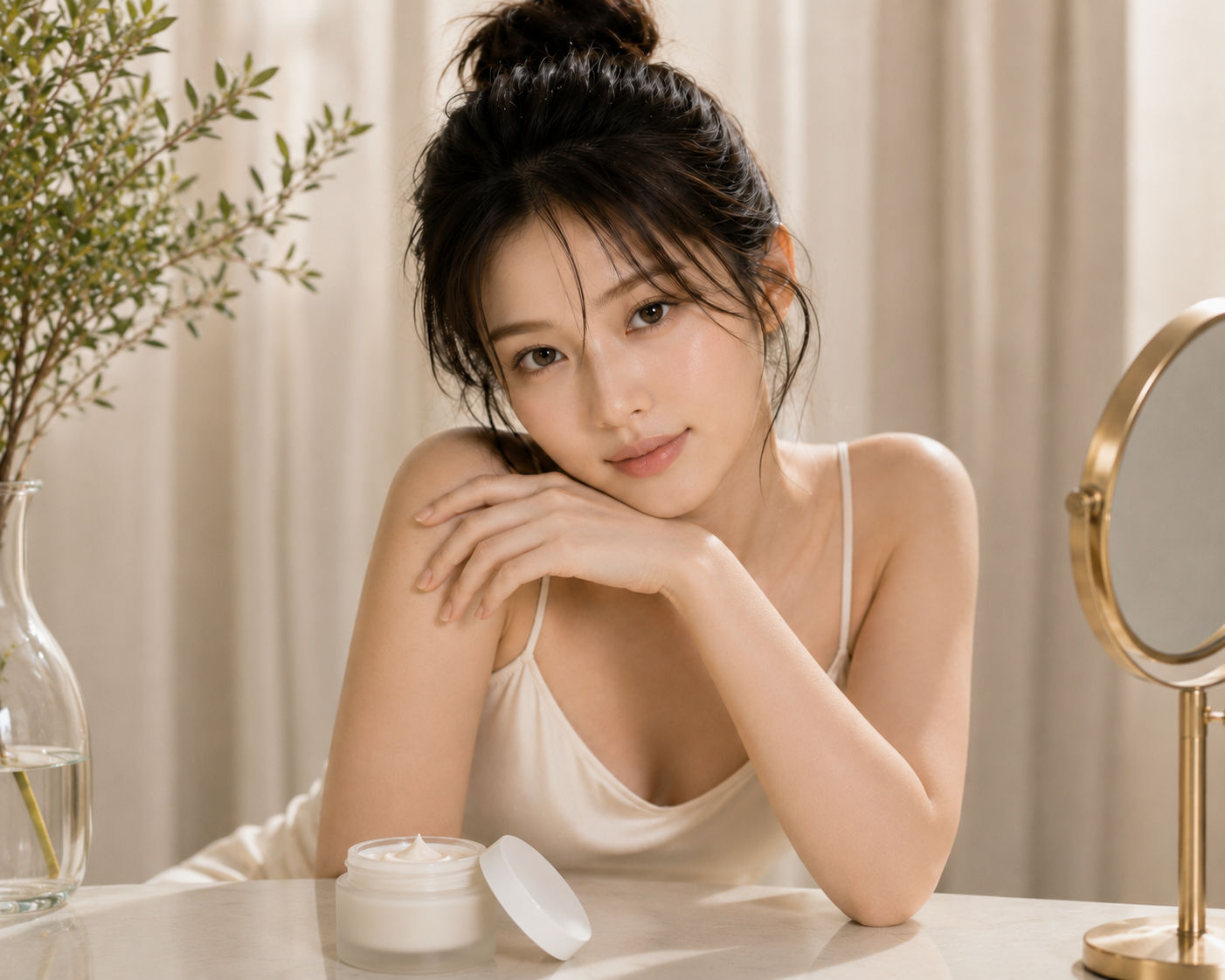
Facial balms are semi-solid formulations with a lower moisture content than regular creams or are nearly anhydrous; they form a lipid film on the skin's surface to reduce moisture evaporation and gently protect dry areas. They can be classified into protective balms applied thinly to the entire face and topical balms used on specific dry areas such as the corners of the mouth, cheeks, and nostrils.
While No.040 Barrier Cream is a daily cream combining water and oil phases, No.049 focuses on strong sealing power, portability, topical reapplication, and moisture-locking functions applied over cream . It must also be distinguished from cleansing balms, lip balms, or multi-balms for color cosmetics, and the basic product is defined as a non-washable moisturizing and protective balm for the face.
The core consumers are those who find it difficult to maintain moisture with cream alone due to localized dryness around the cheeks, mouth, and nose, cold winter winds, low humidity, and prolonged use of heating and cooling. It also includes consumers who experience localized flaking from the use of retinoids or who wish to reapply to dry areas without getting it on their hands while on the go.
Consumers want long-lasting protection and portability even with a small amount, but they avoid products that leave the entire face greasy or sticky, or transfer onto hair or masks. Therefore, the repurchase of facial balm is determined by its spreadability, which melts gently at skin temperature, a thin protective film, low waxiness, and convenience for local application .
Facial balms are an overlapping category in the dry-skin rescue, barrier balm, slugging, cold-weather protection, and on-the-go skincare markets. In North America, petrolatum-based skin protectants and stick-type moisturizing balms are strong, while in Europe, derma multi-use balms are popular, and K-Beauty is expanding with cica, ceramide, and vegan plant oil balms.
The main target customers are as follows.
- Dry to extremely dry skin: Consumers looking to add a moisture-locking layer on top of regular cream
- Localized dryness demand: Customers who manage only the necessary areas, such as the corners of the mouth, cheeks, nostrils, and outer corners of the eyes.
- Winter & Travel Market: Consumers seeking protective products for cold winds, dry indoor environments, and long-distance travel
- Multi-use customers: Demand for use not only on the face but also on small dry areas such as lips and cuticles.
Rather than unnecessarily including oily or acne-prone skin, it is more appropriate to prioritize topical use for dry and combination skin. Since use immediately after procedures or on wounds may fall outside the scope of general cosmetics, it should not be recommended without a separate product or regulatory route.
The performance of a facial balm stems from the sealing power created by emollients such as squalane, hydrocarbons, and vegetable oils, as well as structure-forming ingredients like waxes, butters, and high-molecular-weight oil gels. While a higher occlusive ratio provides stronger inhibition of moisture loss, it can also increase shine and transfer.
| Formula Route | Key Components and Product Characteristics | Buyer's judgment |
|---|---|---|
| Squalane Semi-Occlusive Melt Balm | Squalane, neutral esters, hydrogenated vegetable oils, small amounts of wax, bis-avolol, etc. | Recommended Route with a good balance of facial feel and protection |
| Petrolatum Protective Balm | Fixative petrolatum, mineral oil, panthenol, or glycerin dispersion system | It has strong moisture retention, but requires review for U.S. skin protectant classification. |
| Portable Balm Stick | Stick type with a higher proportion of squalane, esters, and waxes | Advantageous for local reapplication and portability, but requires management of drag and high-temperature deformation. |
Fragrance-Free Squalane Semi-Occlusive Melt Balm is suitable for NoChemiLife . It combines squalane and highly oxidatively stable ester-hydrogenated vegetable oils with minimal amounts of wax and bis-avolol or oil-dispersed soothing ingredients.
While using a large amount of natural butter and vegetable oils enriches the flavor, it can increase particle size, sweating due to temperature changes, rancid odor, and color variations. For products intended for full-face use, a semi-occlusive structure that spreads thinly and is less sticky is more suitable than one with strong sealing power.
While anhydrous balms may have a lower risk of microbial growth than water-based creams, they are not automatically safe from hand contact during use or oxidation of the ingredients. Since plant oils, butters, lanolin, fragrances, and essential oils may cause irritation or allergies depending on the individual, it is advisable to exclude or limit them in products for sensitive skin.
| Confirmation area | Buyer Required Data | Go/Hold criteria |
|---|---|---|
| Protection performance | Moisture · TEWL, Application Amount · Measurement Time · Control Conditions | If moisture loss reduction and skin softness are confirmed in the finished product, Go |
| Usability Validation | Application, gloss, stickiness, transfer, pore discomfort, washability | It must dissolve uniformly in a thin application and not undergo excessive transfer. |
| Safety and quality | Skin compatibility, oxidation and high/low temperature stability, microbial and container compatibility | Hold during particle, sweating, rancid odor, high-temperature melting, and repeated stimulation |
| Claims·Export | Distinguish between moisturizing·protects from dryness and skin protectant | Hold if using treatment for wounds or cracks, or unauthorized OTC wording. |
While petrolatum is a representative occlusive ingredient, not all facial balms offer performance comparable to petrolatum. TEWL alleviation should not be determined solely by the characteristics of the raw materials; it must be verified using the finished product formula and actual recommended dosages. Moisturizer formulation review
In the United States, if petrolatum is used as an active ingredient and claims regarding protection for chapped or cracked skin, or minor cuts and burns are included, an OTC skin protectant route distinct from general cosmetics may apply. When developing for global cosmetics, the scope of claims must be limited to "protection against dryness" or "locking in moisture," or a separate OTC product for the U.S. must be designed. US FDA—Cosmetic, Drug, or Both?
For topical facial balms, 15–25g sticks or 30–50g tubes are suitable. Sticks can be used on the go without getting on hands, but surface hygiene and friction must be checked due to repeated direct contact with the skin. Tubes are advantageous for precise dosage of high-viscosity balms and for contamination control. Jars allow for easy dispensing of the formulation but involve frequent hand contact.
In high-temperature export environments, the chestnuts may melt and leak out of the container or the sticks may bend, while at low temperatures, they may become rough due to wax or butter crystals. In actual sales containers, high and low temperatures, temperature cycling, melting and recrystallization, oil perspiration, cap contamination and leakage, and stick breakage must be checked. If vegetable oils are used, rancidity and off-odors caused by exposure to light and oxygen must also be evaluated.
Facial balms vary widely in price, ranging from inexpensive petrolatum multi-use ointments to premium squalane and plant oil sticks.
- Entry: US$10–18 — Petrolatum or Basic Multi-Use Balm
- Core: US$20–32 — Unscented, low-wax facial balm or stick
- Premium: US$33–50 — Proprietary lipid and soothing ingredients and premium portable packaging
- NoChemiLife Recommended: 30–40g tube or 15–20g stick, US$24–32
Even with a small volume, balms are easy to secure a price per unit because they are used in small quantities and are highly portable. However, to differentiate them from regular Vaseline, they require a texture that melts at skin temperature, low greasiness, and validation specifically for the face.
Kiehl's Ultra Facial Skin Barrier Repair Balm is a squalane-infused stick facial balm designed for portability, allowing for touch-free reapplication to dry areas. It offers a distinct commercial advantage as an on-the-go barrier balm with a transparent finish. Kiehl's Official Product Data
**La Roche-Posay Cicaplast Balm B5+** is a multi-use balm for the face and body combining 5% panthenol with protective ingredients. While closer to a cream balm than a typical anhydrous balm, it is a global standard product that combines derma branding, sensitivity, and protection for dry areas. La Roche-Posay Official Product Data
Aquaphor Healing Ointment is a U.S. OTC skin protectant containing 41% petrolatum as its active ingredient. While it demonstrates strong sealing power and meets the demand for multi-use applications, it is important for buyers that its regulatory and labeling routes differ from those of typical K-Beauty cosmetic balms. Aquaphor Official Product Data
It is appropriate to distinguish NoChemiLife as an unscented, low-wax squalane balm used on local dry areas of the face rather than in the market for OTC ointments for treatment and wound protection.
Korean OEM/ODM companies can develop anhydrous oil balms, Cica cream balms, petrolatum balms, and stick-type multi-balms. Considering that buyers often convert existing lip balm and multi-balm bases for facial use, they must separately verify facial texture and finished product test data.
| RFQ Item | Recommended specifications | OEM/ODM Verification |
|---|---|---|
| Product Concept | Fragrance-Free Squalane Semi-Occlusive Facial Balm | Differences from existing balm bases and ranges for facial use, topical application, and multi-use. |
| Key ingredient | Squalane · Neutral ester · Hydrogenated vegetable oil · Small amount of wax | Raw material purity, oxidation specifications, and actual input amount |
| Formulation and packaging | Low-wax balm that melts at skin temperature, 30–40g tube or 15–20g stick | drag, transfer, sweating, particles, high-temperature deformation, tears |
| Validation | TEWL · Moisture · Sensitivity · Transmigration · Washability, Oxidation · Temperature Stability | Application amount, control conditions, claim scope, and container suitability |
| Commercial conditions | Semi-Custom or Full-Custom Quote | MOQ, filling, mold, testing, and auxiliary material costs, delivery time, and prescription ownership |
Contact to: mail@markethub.org
The RFQ must include the target country, full face or topical use, petrolatum acceptance, exclusion of fragrances and lanolin, desired gloss, melting point, and transition levels, packaging, retail price, and initial quantity. If you are seeking the U.S. skin protectant route, you must inquire separately from the general cosmetic quotation.
The Go condition applies when the role of localized facial moisturization is clear, the product offers a low-wax texture that melts gently at skin temperature, and data on the finished product's TEWL, sensitivity, oxidation, temperature, and container are secured. Tube or stick-type balms are suitable for complementing cream product lines due to their portability and high seasonal demand.
A Hold condition applies when the name of an existing lip balm base is merely changed, or when a large amount of plant oil and wax is added without verifying suitability for the face. A Hold is also appropriate for products that melt or leak at high temperatures, low-temperature particles, rancid odors, strong fragrances, excessive greasiness or transfer, or products that claim to treat wounds or cracks as general cosmetics.
Buyers must verify applicability, gloss, transfer to hair or masks, pore discomfort, and washability on actual facial areas such as the cheeks and mouth area, rather than relying on evaluations on the back of the hand. Priority should be given to manufacturers that provide stability results considering maximum temperatures during international shipping, as well as finished product leakage test results.
Core Evidence
- Kiehl's — Ultra Facial Skin Barrier Repair Balm — Squalane-based portable facial stick balm
- La Roche-Posay — Cicaplast Balm B5+ — A global example of a cream balm combining panthenol and protective ingredients
- Aquaphor — Healing Ointment — 41% Petrolatum-Based US OTC Skin Protectant Benchmark
- The Role of Moisturizers in Addressing Various Kinds of Dermatitis — Academic Data Examining the Functions of Occlusives, Emollients, and Moisturizers
- US FDA — Is It a Cosmetic, a Drug, or Both? — Classification Criteria for Cosmetics and Skin Protectant/Drug Claims
Runtime: 2026-09-01
