


Analysis Region: Gyeonggi-do and 31 cities and counties
Core Regions: Northeastern Gyeonggi, rural, and border areas; areas with changing accessibility to medical and care services, such as Anseong, Yangju, Namyangju, Pocheon, Yeoncheon, Gapyeong, and Yangpyeong
Agenda: Regional disparities in access to medical and care services, workforce, emergency services, and home-based services that may widen faster than the increase in the elderly population
Golden Time Type: Critical + Structural Risk
Reference Date: August 28, 2026
Version: Regional AX Golden Time Intelligence v3.1
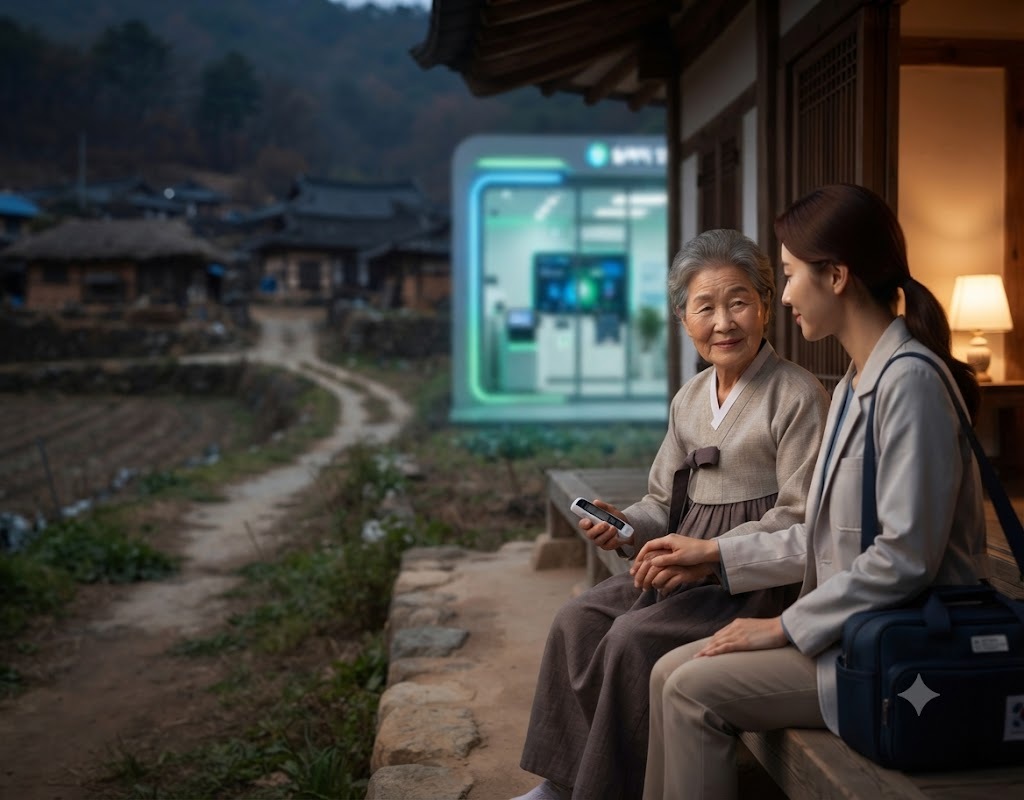
Gyeonggi Province has not yet entered a super-aged society in its entirety. In 2024, the proportion of the population aged 65 and older was 16.6%, and the Gyeonggi Research Institute projects that this figure will surpass 20% around 2028, marking entry into a super-aged society. However, by the end of 2025, the number of residents aged 65 and older in Gyeonggi Province will already reach approximately 2.434 million . South Korea as a whole entered a super-aged society in 2025 with an elderly population proportion of 20.3%. It is highly likely that this massive transformation will begin in earnest in Gyeonggi Province within the next two years or so. ( Gyeonggi News Portal )
However, what is more important in this analysis is not when Gyeonggi Province enters a super-aged society. It is the fact that in some cities and counties, the gap in access to medical and care services is already widening before the aging population.
Even in past studies on Gyeonggi-do's future population, the proportion of people aged 65 and older in Yeoncheon, Gapyeong, and Yangpyeong had already exceeded 20% in 2017, and areas such as Yeoju, Pocheon, and Dongducheon were also aging rapidly. Although this is an outdated Historical Official Baseline , it is clear that the aging of Gyeonggi-do did not proceed at the same pace across its 31 cities and counties. ( E-book Gwangju )
Medical supply is also uneven. The very fact that Gyeonggi Province is pursuing policies to establish 400-bed public hospitals in the northeastern region in Namyangju and Yangju , and to designate Dongducheon, Yangpyeong, Gapyeong, and Yeoncheon as hub medical institutions for medically underserved areas, serves as evidence that there is a need to separately strengthen the infrastructure for essential, emergency, and public medical services in the northeastern region. In a feasibility study conducted in March 2026, the benefit-cost ratio (B/C) for the Namyangju public hospital was assessed at 1.02, while that of Yangju was 1.20; both hospitals are planned as innovative public hospitals combining emergency, rehabilitation, cardiovascular, maternal and child, and psychiatric emergency functions with integrated care. ( Gyeonggi News Portal )
At the same time, the concept of healthcare is also changing. In South Korea, the "Act on Integrated Support for Community Care, Including Medical and Long-term Care" came into effect on March 27, 2026. The structure involves local governments identifying residents who struggle with daily life due to frailty, illness, or disability, connecting them with individual medical, long-term care, and support services, and monitoring their condition thereafter. Gyeonggi Province also expanded its "Care for Everyone" program to all 31 cities and counties starting in 2026. In 2025, the number of users reached 17,549, an 187% increase compared to the previous year. ( Ministry of Health and Welfare Official Website )
The meaning of this change is clear.
As the elderly population increases in the future, the focus of medical policy must shift from "going to the hospital when sick" to the Continuum of Care , which involves early detection of risks in the community → managing health at home → receiving visiting medical care and nursing if necessary → being referred to a hospital if the condition worsens → returning to community care after discharge .
Gyeonggi-do's Golden Time does not lie solely in building a few more hospitals. The key is whether, within the next two to three years, we can prevent a "Gyeonggi-do where treatment and care outcomes differ depending on where one lives" by connecting data on aging, diseases, medical accessibility, emergency transport, home medical care, long-term care, and care across 31 cities and counties .
The medical and care issues in Gyeonggi-do stem from the fact that both the scale and the space are large.
By the end of 2025, the registered population of Gyeonggi Province is projected to be approximately 13.73 million, of which about 2.434 million are aged 65 or older . At the same time, the number of registered persons with disabilities is approximately 592,000, of which about 315,000 are aged 65 or older, accounting for 53.3% of the total. This implies a high likelihood of overlap between population aging and the demands for disability, chronic diseases, and care services. ( Gyeonggi Provincial Government )
At the national level, the annual per capita medical expenditure for the elderly aged 65 and older in 2023 was 5,306,000 won , and the out-of-pocket expense was 1,252,000 won. In a 2025 OECD comparison, Korea has 12.6 hospital beds per 1,000 people, significantly higher than the OECD average of 4.2, but the number of active physicians is 2.7 per 1,000 people, lower than the OECD average of 3.9. In other words, the Korean healthcare system has a structure where there are many hospital beds but a relative shortage of medical personnel . ( Statistics Korea )
In Gyeonggi-do, this structure appears differently depending on the region.
Large cities such as Suwon, Seongnam, Bucheon, and Goyang offer relatively easy access to university hospitals, general hospitals, and various private medical institutions. On the other hand, areas like Yeoncheon, Gapyeong, Yangpyeong, and Pocheon may experience longer actual travel times due to their wide living areas and low population density, even if the same number of medical facilities exist.
Therefore, the key indicator of the medical disparity in Gyeonggi-do is not the number of hospitals.
It should be “can you receive the necessary treatment within the necessary time?”
In medical and care services as well, we must distinguish between the number of facilities and actual service accessibility.
- Number of beds ≠ Access to essential medical care
- Hospital construction plan ≠ actual possibility of medical treatment
- Existence of care services ≠ Provision of services at necessary times
- Signing up for AI care ≠ Risk reduction
- Implementation of the integrated care system ≠ actual integration of medical, nursing, and welfare services.
A study on continued community residence published by the Gyeonggi Research Institute in 2026 analyzed that while there are 16,908 elderly welfare facilities in Gyeonggi Province , there are significant disparities in accessibility between regions. In some border areas and newly developed regions, the percentage of residents accessible to welfare facilities within a five-minute walk (approximately 300 meters) was only 1–2% . This implies that even with a large total number of facilities, they may be difficult to utilize within one's actual living area. ( Gyeonggi News Portal )
The composition of facilities is also unbalanced. The study found that in-home care facilities accounted for a large proportion with approximately 4,396, while senior welfare centers numbered only 67. If medical, housing, leisure, and care functions are fragmented, it is difficult to explain the welfare perceived by residents based solely on the number of facilities. ( Gyeonggi-do News Portal )
The same applies to Gyeonggi Province's push to build new public hospitals in Yangju and Namyangju. As of 2026, feasibility has been secured, but subsequent procedures such as preliminary feasibility studies, consultations with the central government, design, and construction still remain.
The confirmation of the need for a public hospital and the actual treatment of residents are events that occur at different times .
Therefore, medical policy must track not only the planning, commencement, and completion of facilities, but also the actual securing of doctors, the operation of medical departments, and the acceptance rate of emergency patients.
The first change is the shift from hospital-centered healthcare to community-centered healthcare .
The elderly often suffer from more than one disease. Hypertension, diabetes, cardiovascular disease, joint disease, and cognitive decline may overlap, and even mobility may decline.
At this point, solving all problems by visiting a hospital is not sustainable.
The Community Integrated Care System, implemented in 2026, allows local governments to manage everything from application, investigation, and comprehensive assessment to individual support plans, services, and monitoring. This marks a shift from an institution-centered approach to a single, individual-centered Care Pathway for medical, nursing, and care services . ( Ministry of Health and Welfare Official Website )
The second change is the shift from treatment to prevention and early detection .
It is important to detect risks in the community first, such as falls, loneliness, malnutrition, medication errors, and cognitive decline in the elderly, rather than responding after they arrive at the emergency room.
The third change is the shift from institutional care to Aging in Place .
According to the 2023 Survey on the Status of the Elderly, 87.2% of respondents said they would like to continue living in their current homes if their health remained stable. Another 48.9% said they would want to continue living in the same place even if their health deteriorated. ( Gyeonggi-do News Portal )
The fourth is the shift from care provided solely by humans to AI+Human Care .
Gyeonggi Province is introducing AI welfare calls, smartphone-based health management, crisis prediction, monitoring services, and AI senior care towns. Based on previous performance data from 2026, where AI care services were operated for 1,315 individuals across eight cities and counties, the province is expanding health MyData integration and risk prediction functions. ( Gyeonggi News Portal )
The key is a structure where AI does not replace humans, but rather detects risks that humans are prone to missing .
The biggest institutional change in Gyeonggi-do's medical and care policy in 2026 is the completion of the integrated care system in 31 cities and counties .
Gyeonggi Province's "Care for Everyone" provides services across eight areas, including living support, meal support, mobility support, housing safety, temporary shelter, psychological counseling, rehabilitation care, and visiting medical care. Visiting medical care is designed to provide examinations, prescriptions, and tests to residents with limited mobility or those who have difficulty accessing medical institutions. ( Gyeonggi News Portal )
The cumulative number of users in 2025 was 17,549, a significant increase from 10,035 in 2024, and expanded to all 31 cities and counties starting in 2026. ( Gyeonggi-do News Portal )
The second pillar is the alleviation of the burden of caregiving costs . The Caregiving SOS Project was expanded to 16 cities and counties by 2026. In 2025, 1,346 cases were supported across 15 cities and counties, with those in their 80s accounting for 42.1% and those in their 70s for 33.7% of the analyzed subjects. This is actual evidence that the demand for caregiving is concentrated among the elderly. ( Gyeonggi-do News Portal )
The third is AI care .
The AI Senior Companion Service identifies signs of crisis through welfare check calls, and if calls are not answered a certain number of times or danger is detected, a human verifies the situation and connects the individual to city or county welfare services. The service target for 2025 was 6,500 people, and the number of services provided from 2024 to the end of November 2025 was 376,972. ( Gyeonggi-do News Portal )
The fourth is public healthcare infrastructure .
Innovative public hospitals with a capacity of 400 beds are being pursued in Namyangju and Yangju, respectively, with plans to combine smart hospital functions—including AI sensors, biometric analysis, and medical automation—with integrated care capabilities. ( Gyeonggi News Portal )
Gyeonggi Province has already started to incorporate the components of hospitals, home medical care, care services, and AI.
The next step is to connect these into a person's health journey .
The structure of South Korea's medical system is not one where problems arise solely from a lack of quantitative resources.
According to OECD 2025 data, South Korea has 12.6 hospital beds per 1,000 people, which is three times the OECD average of 4.2. CT, MRI, and PET equipment also stands at 87 per million people, exceeding the OECD average of 51. On the other hand, the number of active physicians is 2.7 per 1,000 people, lower than the OECD average of 3.9. ( OECD )
The long-term care workforce stands at 5.3 people per 100 people aged 65 or older, similar to the OECD average of 5.0. However, due to the very rapid pace of population aging, it is difficult to conclude that the current level will remain sufficient in the future. ( OECD )
The problem for Gyeonggi Province here is that the fact that there are many medical resources in the metropolitan area is different from the issue of whether all Gyeonggi residents can use those medical resources within the same timeframe .
Even if there are many large hospitals in the metropolitan area, actual access to medical care is low if residents of Yeoncheon and Gapyeong have to travel long distances for severe or emergency treatment.
Therefore, Gyeonggi Province's competitors are not simply other metropolitan local governments.
The question of how to make access to medical care and support equitable within a large metropolitan area is a problem specific to Gyeonggi-do.
The population aged 65 and over in Gyeonggi Province is approximately 2.43 million by the end of 2025. ( Gyeonggi Provincial Government )
The proportion of the elderly population in Gyeonggi Province was 16.6% in 2024, and it is projected to exceed 20% by 2028. ( Gyeonggi News Portal )
On the other hand, while there are 16,908 welfare facilities for the elderly, in some areas, the proportion of facilities accessible within a five-minute walk is only 1–2%. ( Gyeonggi-do News Portal )
The number of users of the "Care for Everyone" service increased to 17,549 in 2025 and expanded to all cities and counties in 2026. ( Gyeonggi-do News Portal )
In the northeastern region, new public hospitals with a capacity of 800 beds—400 beds each in Yangju and Namyangju— are being pursued. However, these beds are not yet in actual operation. ( Gyeonggi-do News Portal )
Connecting the numbers reveals the core of Gyeonggi-do's medical and care services.
With the elderly population already reaching millions, the healthcare and care supply system is being redesigned starting now.
In other words, rather than creating measures after becoming a super-aged society, systems and infrastructure must outpace the speed of aging.
The first is the gap between the number of medical facilities and the actual time to access medical care .
Even if a hospital exists, actual accessibility is low if the elderly cannot move on their own or have to travel long distances to receive specialized medical care.
The second is the essential medical care gap between large cities and northeastern and rural areas .
The very fact that Gyeonggi Province is separately pursuing an 800-bed public hospital in the northeast and designating a hub hospital for medically underserved areas demonstrates the structural disparity.
The third is the gap between hospitals and care .
If elderly patients discharged from the hospital do not receive visiting nursing, meals, housing, or rehabilitation services, their health may deteriorate again, potentially leading to a return to the emergency room or hospital.
The fourth is the gap between service provision and outcome .
100,000 AI welfare calls and 10,000 home care visits are the Output. The Outcome is how much emergency hospitalizations, deaths from isolation, falls, and readmissions have decreased due to this service.
The fifth is the gap between care demand and manpower .
If the number of elderly people increases rapidly, we must track whether the number of caregivers, nurses, social workers, rehabilitation personnel, and visiting medical staff is increasing sufficiently.
The sixth is the integrated care implementation capacity gap among the 31 cities and counties .
Even with the same laws and Gyeonggi-do initiatives, the actual quality of service can vary depending on the supply volume of local hospitals, clinics, pharmacies, welfare agencies, and long-term care facilities.
The most important infrastructure in Medical & Care AX is not the hospital server, but the Health & Care Data Linkage .
For a single elderly person, data regarding health insurance, hospital treatment, medication prescriptions, long-term care, welfare, care services, 119 transport, housing, and single-person households may exist in different institutions.
If this data is isolated, it is difficult to detect risks in advance.
The structure required for the future is to connect population/households → chronic diseases → medical utilization → medication → mobility → long-term care → care services → emergency transport → admission/discharge at the local level.
The Integrated Care System of 2026 mandates that local governments manage preliminary assessments, integrated evaluations, individualized plans, service provision, and monitoring. In other words, the institutional foundation for such integrated management has been established for the first time. ( Ministry of Health and Welfare Official Website )
If AI is utilized here, there is a possibility of shifting from 'welfare waiting for service applications' to ' welfare that detects risks first .'
However, health and welfare data is very sensitive.
Therefore, AX should be designed not to collect as much personal information as possible, but with a structure of minimum necessary data + purpose restriction + access control + explainable risk assessment .
The success of medical and care policies should be judged by whether residents can actually receive services in their homes.
The 2026 'Care for Everyone' system is designed so that after an application, Eup, Myeon, or Dong offices assess the on-site situation and establish a care plan; emergency cases will be dispatched immediately, while general cases will also be provided after on-site verification. ( Gyeonggi Provincial Government )
This can be simpler from the residents' perspective compared to the existing service-specific application method.
Home medical care is particularly important.
The most vulnerable people in the healthcare gap for the elderly are not only those without hospitals. They are those who have hospitals but cannot access them .
Elderly people who have difficulty walking, have dementia or disabilities, or live alone may find it virtually impossible to access even a hospital 2km away.
Therefore, visiting medical care, visiting nursing, and mobility support can have just as much impact on access to medical care as the establishment of new hospitals.
AI care should also be viewed from the same perspective.
The key is not whether the AI made the call, but how many hours earlier the danger was actually detected and how quickly a human intervened .
The medical disparity in Gyeonggi-do cannot be adequately explained by a simple dichotomy of the South and the North.
Even in cities with many large hospitals like Seongnam, Suwon, and Bucheon, accessibility issues may exist for single-person elderly households, low-income groups, and mobility-impaired groups.
On the other hand, rural and border regions have low population density, making it economically difficult to arrange facilities as densely as in large cities.
According to a 2026 study by the Gyeonggi Research Institute, accessibility to welfare facilities in border areas and parts of newly developed areas was as low as 1–2% based on a 300m walking distance. ( Gyeonggi News Portal )
In past aging forecasts by city and county in Gyeonggi Province as well, Yangpyeong, Yeoncheon, Gapyeong, and Yeoju were predicted to be regions with a very high proportion of the elderly in the future. ( eBook Gwangju )
Connecting these two conditions reveals an important structure.
The region with the fastest aging population is likely to have the lowest spatial supply efficiency for medical and care services .
Therefore, it is difficult to resolve this with the same hospital and welfare facility placement policy.
Cities must be facility-centered, while rural and border regions must transform into a model that combines hubs, visits, mobility, and digital capabilities.
The first reason is that the entire Gyeonggi Province has not yet entered a super-aged society.
The proportion of the elderly population, which stood at 16.6% in 2024, is projected to surpass 20% by 2028. Over the next few years, the demand for medical and care services is expected to increase structurally. ( Gyeonggi-do News Portal )
The second reason is that the integrated care legislation was just implemented on March 27, 2026 .
The operational methods and data structures currently being developed for each city and county are highly likely to become the future standard for care services in Gyeonggi-do. ( Ministry of Health and Welfare Official Website )
The third reason is that the public hospital in the northeast is still in the design phase.
The public hospitals in Namyangju and Yangju are scheduled to complete their feasibility studies in 2026 and are currently in the stage of proceeding with preliminary feasibility studies. If the roles of local clinics, public health centers, nursing facilities, and visiting medical services are not designed together starting now, a coordination system will have to be re-established once the hospitals are completed. ( Gyeonggi-do News Portal )
The fourth reason is that AI care has moved beyond the pilot phase and started to spread.
We must decide whether to keep AI at the current level for simple companionship and welfare calls, or to develop it into risk-predicting Care Intelligence by combining it with health and lifestyle data .
Therefore, the period from 2026 to 2028 is a golden time for Gyeonggi Province to change its medical and care operating model before entering a super-aged society, rather than responding afterward .
12-1. Golden Time Application Case in Basic Local Governments ① — Anseong City
Anseong has an important reason for this topic.
In July 2026, the Ministry of Health and Welfare selected Anseong as a case study for an on-site inspection to mark the 100th day of the full-scale implementation of the Community Integrated Care program. Anseong City is the only city in the nation to operate a dedicated integrated care team centered on its public health center, connecting medical, health, and welfare services into a single system. ( Ministry of Health and Welfare Official Website )
In addition, the 'Anseong-tailored Home Nursing Center' is being prepared as an independent local government initiative, rather than a central government pilot project . It is structured to provide professional visiting nursing care to discharged patients and elderly individuals with limited mobility. ( Ministry of Health and Welfare Official Website )
The significance of the ophthalmic plastic surgery model lies in the fact that it can demonstrate a method to improve medical accessibility without building new large hospitals.
Hospital Discharge → Public Health Center → Visiting Nursing → Welfare → Meals & Transportation → Condition Monitoring
Connecting them into a single path can reduce administrative costs associated with patients having to reapply for each service.
Anseong's Golden Time is to make this into an Integrated Care Digital Care Pathway .
If we can link data on which patients have been discharged, when home nursing care began, whether they are taking their medication properly, and whether their condition is deteriorating, there is a possibility of reducing readmissions and emergency room visits.
Anseong can become a demonstration site for a home medical and care operation model that the entire Gyeonggi Province can use.
12-2. Golden Time Application Cases in Basic Local Governments ② — Yangju City
Yangju is a case at a completely different level from Anseong.
While Anseong is a place that creates integrated care by connecting existing local resources, Yangju is a region that is building the previously lacking public medical infrastructure itself from scratch .
Gyeonggi Province is pursuing the construction of an innovative public hospital with approximately 400 beds in Yangju. A feasibility analysis conducted by the Korea Health Industry Development Institute in March 2026 showed a benefit-cost ratio of 1.20 . The plan envisions the hospital housing around 18 medical departments and 16 specialized centers, including a psychiatric emergency center, to serve as a link between essential regional medical care and support services. ( Gyeonggi News Portal )
Since Yangju is located in a position that connects to the northern Gyeonggi living area, including Yeoncheon, Pocheon, Dongducheon, and Uijeongbu, it needs to be designed as a medical hub for northern Gyeonggi rather than a hospital for a single city.
In particular, plans were also presented to introduce AI sensors, biometric data analysis, and medical task automation into hospitals. ( Gyeonggi-do News Portal )
However, Yangju's Golden Time does not lie in building an 'AI hospital'.
Even before the opening of the public hospital
We must design a northern medical system consisting of local clinics → public health centers → visiting medical services → 119 → public hospitals → rehabilitation → discharge → integrated care.
Otherwise, only one more 400-bed hospital will be built, and the regional medical disparity could remain unchanged.
The first loss is time for emergency and essential medical care .
For conditions such as myocardial infarction, stroke, and severe trauma, survival and residual disability are directly affected not by the absolute distance to a treatment facility, but by whether it can be reached within the golden hour.
The second is the continued residence of the elderly in the community.
If medical care and support are insufficient, the elderly may become overly dependent on hospitals or facilities or leave their communities.
The third is family time and income.
The burden of caregiving, accompanying patients to hospitals, and long-distance outpatient visits is ultimately passed on to the family. The fact that the demand for caregiving SOS services in 2025 is concentrated among those in their 70s and 80s demonstrates that these costs are already becoming a reality. ( Gyeonggi-do News Portal )
The fourth is medical finance.
If locally manageable diseases are not detected early, they can progress to more expensive stages, such as emergency room visits, hospitalization, or long-term hospitalization.
The fifth is the entrenchment of regional disparities.
A structure in which medical care and care are easily accessible in large cities, while families take on the responsibility in rural and border areas, could become entrenched.
The sixth is the golden time for utilizing AI.
If AI care becomes fixed as a simple welfare check service, it may become more difficult to develop it into a risk prediction system that connects medical, health, and care data in the future.
Gyeonggi Province already has a substantial foundation to reduce the gap in medical and care services through AX.
The integrated care system has been launched in 31 cities and counties, care for everyone has been expanded to the entire region, and AI care is in operation. A new public hospital is also being promoted in the northeast.
By connecting these resources into a single structure, Gyeonggi-do can shift from hospital-centered healthcare to community-based Health Intelligence.
For example, if AI detects warning signs in changes in the activity or health of an elderly person living alone, a counselor can verify the information, arrange for visiting nursing if necessary, and refer them to a local clinic or public hospital if their condition deteriorates.
After discharge, the service returns to visiting nursing, rehabilitation, meal support, and home renovation.
Through this, risk detection → visit → treatment → discharge → rehabilitation → return to daily life becomes a single data pathway.
If this structure is established, the burden of having to supply all services to facilities in medically underserved areas can also be reduced.
This is because it can increase the proportion of medical services reaching out to people.
Gyeonggi Province needs Health & Care Readiness Maps for 31 cities and counties.
Changes to observe | Things to do with AX | Policy decision | Verification indicators |
| Increase in the elderly population | Demand forecast by Eup, Myeon, and Dong | Personnel and service pre-positioning | Supply relative to the elderly |
| chronic diseases | Health Data Risk Analysis | Selection of priority targets for home health care | Worsening and hospitalization rates |
| Access to medical care | Mapping actual travel time | Relocation of hub medical services | Consultation access time |
| Emergency medical services | 119 Transfer Runtime Analysis | Strengthening emergency bases | Time to reach final treatment |
| discharged patients | Community linkage immediately upon discharge | Automated Visiting Nursing Linkage | Re-admission rate |
| Care gap | Service demand forecasting | Care placement for everyone | Application → Provision Time |
| Single-person elderly households | AI Warning Signal Detection | Human Intervention | Time of danger detection |
| home medical care | Regional supply tracking | Manpower support for vulnerable areas | Home visit medical care utilization rate |
| Care workers | Demand-Supply Forecast | Improvement of education and treatment | Unmet demand |
| regional disparities | Comparison of 31 cities and counties | Intensive investment in vulnerable areas | Health Outcome GAP |
In particular, indicators centered on the number of medical institutions
It is necessary to shift the focus to Access → Response → Treatment → Recovery → Aging in Place .
Medical AX is not about introducing a lot of diagnostic AI, but about first identifying who is at risk and ensuring that the right person intervenes at the right time .
Critical + Structural Risk
This topic is considered a risk one level higher than general Opportunity + Structural Risk.
The reason is simple.
This is because population aging is not a future plan but is already underway, and healthcare and care are sectors where it is difficult to rapidly increase supply once the need arises.
It takes several years to train doctors, build hospitals, and secure personnel for home medical care and long-term care.
There is also considerable positive evidence.
The Integrated Care Act came into effect in 2026, and Gyeonggi-do’s "Care for Everyone" program was expanded to 31 cities and counties. AI-based care is also in operation, and public hospitals in Yangju and Namyangju have even secured economic feasibility. ( Ministry of Health and Welfare Official Website )
Therefore, it is not a state where there is absolutely no preparation.
However, public hospitals are still in the planning stage, medical and care supply capabilities vary by city and county, and the elderly population continues to increase.
In particular, given that the entire Gyeonggi Province is on the verge of entering a super-aged society around 2028, the current two to three years are close to the last preparation period to change the structure before demand outpaces supply capacity. ( Gyeonggi News Portal )
Therefore, the current stage is assessed as Critical + Structural Risk .
In future runtime analysis, at least the following evidence must be continuously tracked.
- Gyeonggi Province population aged 65 and over
- Ratio of elderly population by city and county
- Late elderly population aged 80 or older
- Elderly living alone and single-person elderly households
- Prevalence of chronic diseases by city/county
- Number of doctors and specialists by medical department
- Nurses, caregivers, and visiting nurses
- Number of emergency medical institutions
- Average 119 transport time by region
- Time to reach final treatment for severe patients
- Cases of refusal to transfer or accept emergency patients
- Areas lacking essential medical services
- Actual access time to hospitals and clinics by region
- Number of home medical service users
- Number of visiting nurse users
- Care utilization rate for everyone
- Time required from application to actual service
- Discharged patient community linkage rate
- 30-day and 90-day readmission rates after discharge
- Long-term care waiting list and unmet demand
- Changes in Caregiving Cost Burden and Eligibility
- Number of AI care risk signal detections
- Actual human intervention time after AI detection
- Yangju and Namyangju Public Hospital Implementation Process
- Health and Care Outcome Gap Among 31 Cities and Counties
The most significant data gap currently is that while the number of medical facilities in Gyeonggi-do can be verified, there is a lack of integrated public data to compare whether residents actually received necessary medical care within the required time across the 31 cities and counties .
Runtime Chain
Aging/Disease → Warning Signs → AI/Community Detection → Visiting Health/Care → Clinic/Hospital Referral → Emergency/Hospitalization → Treatment → Discharge → Home/Rehabilitation → Continued Community Living
The first key evidence of this analysis is the fact that while Gyeonggi Province as a whole is not yet a super-aged society, it is rapidly approaching it. The proportion of the elderly population was 16.6% in 2024 and is projected to surpass 20% by 2028. By the end of 2025, the number of residents aged 65 or older reached approximately 2.434 million. ( Gyeonggi News Portal )
The second piece of evidence is the discrepancy between the total number of facilities and actual accessibility . A 2026 study by the Gyeonggi Research Institute revealed that despite there being 16,908 elderly welfare facilities, the proportion accessible within a five-minute walk in some border and newly developed areas remains at only 1–2%. ( Gyeonggi News Portal )
The third piece of evidence is the plan to establish new public hospitals to address the medical disparity in northeastern Gyeonggi-do. The 2026 feasibility study yielded a benefit-cost ratio (B/C) of 1.02 for Namyangju and 1.20 for Yangju, and both are planned as integrated public hospitals with approximately 400 beds each, providing emergency, essential medical, rehabilitation, and care services. ( Gyeonggi-do News Portal )
Results of the 2026 Feasibility Study for Public Hospitals in Northeast Gyeonggi
The fourth piece of evidence is the structural change in the delivery of medical care and support services. Starting March 27, 2026, the Community Integrated Care System was implemented as a full-scale legal program, with local governments managing the entire process from application to individual planning and monitoring. ( Ministry of Health and Welfare Official Website )
Ministry of Health and Welfare Community Integrated Care System Guide
The fifth factor is Gyeonggi Province's own implementation. The 'Care for Everyone' program was expanded to all 31 cities and counties by 2026, and the number of users increased to 17,549 in 2025. It encompasses not only daily living, meals, mobility, housing, and rehabilitation, but also home medical care. ( Gyeonggi News Portal )
The sixth is AI. Gyeonggi Province is applying AI not merely to improve administrative efficiency, but to identify blind spots in care services, by operating AI companionship for the elderly, health management, prediction of lonely death risks, monitoring, and AI senior care towns. ( Gyeonggi News Portal )
Structural insights remaining from this analysis
If we approach Gyeonggi Province's medical and care issues solely from the perspective that "more hospitals must be built because the elderly population is increasing," we miss the most important changes.
There are many hospitals in Gyeonggi-do.
Even looking at South Korea as a whole, the number of hospital beds is much higher than the OECD average.
Nevertheless, medical disparities occur.
This is because the healthcare gap is now a matter of time and connectivity, rather than the availability of hospital beds .
- Can the elderly go to the hospital?
- How many minutes does an emergency patient arrive at the hospital for final treatment?
- Does a discharged patient receive visiting nursing?
- Who is the first to detect warning signs in elderly people living alone?
- Do people who cannot eat receive medical and welfare services simultaneously?
The actual health results vary depending on this question.
In particular, Gyeonggi Province is difficult to apply the same medical policy to 31 cities and counties because mega-urban areas and rural, mountainous, and border regions exist within a single metropolitan local government.
In Suwon or Seongnam, it may be important to manage the division of roles among hospitals and overcrowding in emergency rooms.
In Yeoncheon and Gapyeong, visiting medical care and emergency transport may be more important.
In Anseong, connecting medical and care services centered around public health centers can be effective.
In Yangju, the new public hospital itself can become the foundation of essential regional medical services.
Therefore, what is needed is not 31 identical medical policies, but 31 Health & Care Readiness Maps .
The role of AI also becomes clear here.
AI replacing doctors in medical treatment is not the first goal of Gyeonggi Medical AX.
The greater possibility is
It is to discover the danger first .
For example, if an elderly person living alone does not answer the phone as usual, reduces activity levels, stops taking medication, or has recently visited the emergency room, each of these data points is a small signal.
However, connecting it may increase the risk.
If AI detects that signal and a visiting nurse or welfare worker verifies it, the system can change from discovering the elderly after they have collapsed to visiting them before they collapse .
However, technology alone cannot solve the problem.
Even if AI alerts you to danger, it is meaningless if there is no one to respond.
Even if you apply for home medical care, it will not work if there is no doctor.
Therefore, Medical AX must be a Human-centered Care Operating System that connects AI + Doctors + Nursing + Care + 119 + Public Health Centers + Hospitals.
It becomes clearer when applying the structure of Gyeonggi-do Administrative AX presented in No. 004—discovery of change signals → reverse reporting to the responsible department → policy decision → outcome verification—to medical care.
Detection of health risk signals → Confirmation by local Care Team → Decision for visit/treatment → Service provision → Verification of changes in health status
am.
Ultimately, what is more important than the fact that Gyeonggi Province is entering a super-aged society is what kind of system it already has in place when it enters it .
Golden Time Thesis — The golden time for medical care and support in Gyeonggi-do is not the time to increase hospital beds and facilities after becoming a super-aged society. Rather, it is the time to establish a 'Community Health & Care Operating System' within the next two to three years. This system will connect data on aging, diseases, emergencies, visiting medical care, and support across 31 cities and counties to detect risks early, ensure medical care reaches those unable to access hospitals, and enable discharged patients to return to living in their local communities. If the outcomes of treatment and care vary due to the region where a person lives, Gyeonggi-do's preparation for a super-aged society cannot be considered complete.
Version | Reference Date/Revision Date | Major changes |
| v1.0 | 2026.08.28 | This study provides the first analysis of widening regional disparities in medical and care services prior to Gyeonggi Province's entry into a super-aged society. It examines Gyeonggi Province's elderly population, accessibility to medical and welfare facilities, the OECD healthcare resource structure, integrated care across 31 cities and counties, "Care for All," AI-based elderly care, and the current status of public hospital initiatives in the northeastern region. Through the cases of Anseong and Yangju, it presents the necessity of establishing a Health & Care Readiness Map and a Community Care Operating System. The "Golden Time" is assessed as a combination of Critical and Structural Risks. |
